The most important sustainable factors when considering a product purchase

Helping manufacturers and retailers align with what eco-conscious customers believe are the most important aspects of sustainability.

Considering a sustainable purchase
Published: Apr 11, 2025 Written by: Richard Silk

Sustainability is going mainstream this year. But with so many definitions and claims flying around, it’s no wonder consumers (and businesses) are left scratching their heads. If you’re a manufacturer or retailer on a mission to do better for the planet and your customers, then understanding what really matters to people when they make a sustainable purchase is step one.

This article dives into the latest data from the 2025 Sustainable Product Index Report to unpack what buyers are actually looking for. And spoiler alert: it's not always what businesses think.


What customers actually think the most important sustainability issues are

When asked which sustainable factors matter most:
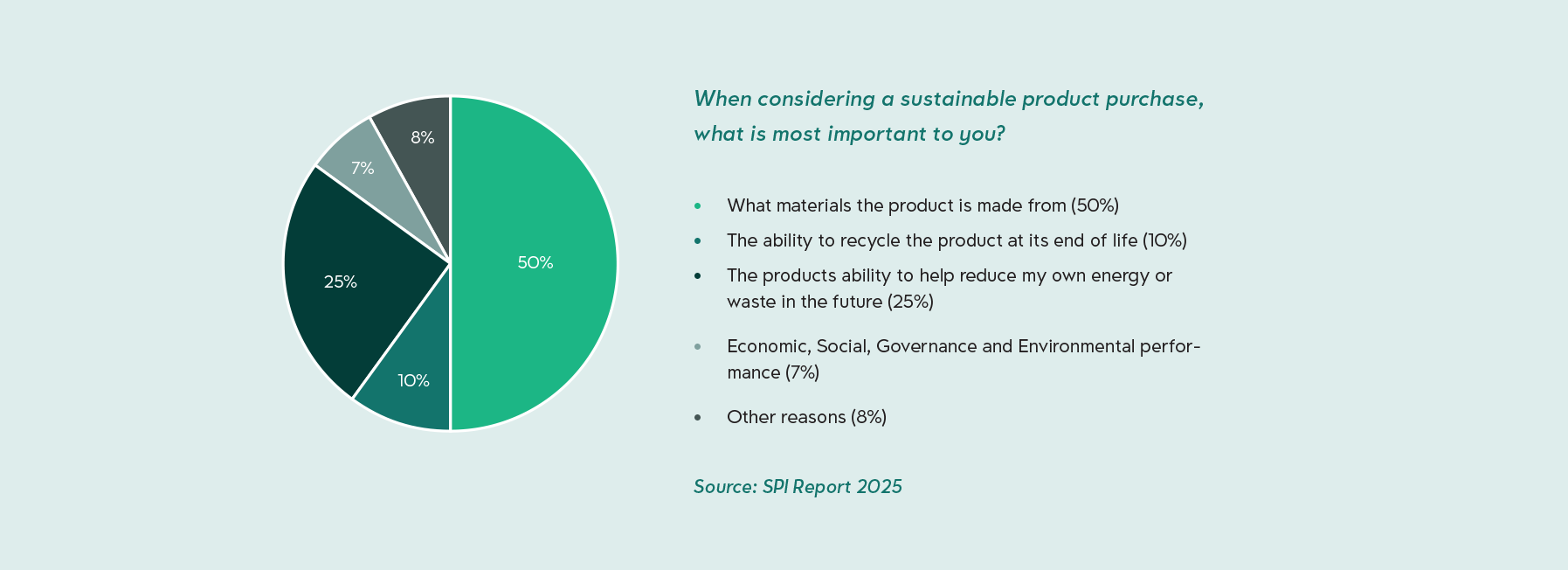
  • 50% of people said the materials the product is made from is their top priority
  • 25% said it’s the product’s ability to help them reduce their own energy or waste


Materials matter. And not just because they sound good on paper. Shoppers are increasingly aware of things like plastic content, biodegradability, and the overall carbon footprint of raw materials.

There’s also a strong focus on practical impact. Customers want to know: Will this product actually help me live more sustainably? If the answer is yes, they’re far more likely to hit "buy."


The sustainability research habits of your customers

Eco-conscious customers do their homework. When asked the question “When considering everything you purchase, how often would you say sustainability plays an important role in your decision-making?”

  • 83% say sustainability plays a role in at least 75% of their purchases

When asked about the amount of research done before a product purchase:

  • 59% look at 2-3 product options before deciding
  • 16% do extensive research to find the most sustainable option

The takeaway? People are looking. If you don’t clearly communicate your product’s sustainable features, you risk being left out of the comparison.

The categories where sustainability matters most

When asked about which product categories matter most from a sustainability point of view, the top 3 responses were:

  • Personal care products (83%)
  • Clothing and footwear (67%)
  • Food and beverages (58%)

It’s worth noting: businesses may be shouting about things customers aren’t actually listening for and there seems to be a misalignment between what businesses vs consumers think sustainability is. The opportunity? Reframe your messaging (and product design, if needed) around what people care most about.

Which brings us to the real heart of the matter…

SPI Report Mockup 1 2025

Download the Sustainable Product Index Report (Instant download)

Anyone can download a copy to gain access to business insights that are helping manufacturers and retailers benchmark themselves on sustainability issues.

What customers really want from a sustainable product purchase

If you take one section of this article as a takeaway, let it be this one. Why? Because these are the specific features that customers (not businesses or environmentalist's) say matter most to them when making a sustainable purchase. These aren’t necessarily what’s best for the planet or easiest for your business to implement. They are, however, the real-world factors that influence buying decisions.


1. Materials Matter Most

Half of all respondents said the materials a product is made from is their number one priority. They want transparency around what goes into a product - especially when it comes to plastic, cotton, metals, and packaging.

  • Highlight if your product uses recycled, reclaimed, or natural materials
  • Avoid vague claims like "eco-friendly" or "sustainable" without specifics
  • Show certifications or explain material origin (e.g. "made with 80% recycled PET from post-consumer waste")

Remember: customers don’t expect perfection, but they do expect honesty. Clear material information builds trust.


2. Energy & Waste Reduction for the User

It’s not just about your business reducing waste - it’s about how your product helps them reduce theirs.

  • Products that help cut down on disposable use (reusables, concentrates, refills)
  • Energy-saving functionality (e.g. low-power appliances, efficient manufacturing inputs)
  • Water-saving features and minimal cleaning requirements

Buyers are often juggling busy lives and don’t want extra work. If your product helps them reduce their footprint without sacrificing convenience, that’s a win.


3. Durability and Reusability

Fast fashion and throwaway culture are on the decline. People want products that last.

  • Communicate durability clearly: "Built to last for 10+ years"
  • Emphasise reusability or replaceable parts
  • Offer guidance on product care, repairs, or parts replacement

A product that looks good today and still works next year will always feel like a smart, sustainable purchase.


4. Minimal & Recyclable Packaging

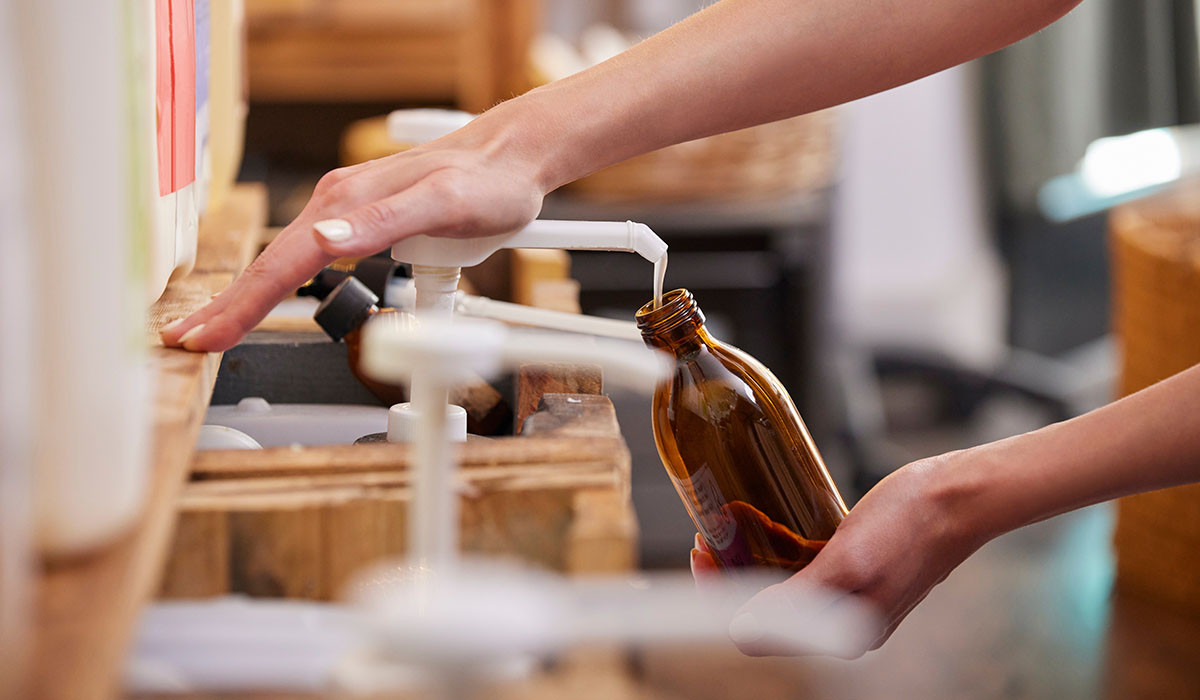
Packaging is the first impression. And for eco-conscious consumers, it matters a lot.

  • Use recyclable or compostable materials whenever possible
  • Avoid excess packaging and plastic wraps
  • Tell your customers what to do with packaging after use

Over 57% of businesses surveyed in the SPI report offer fully recyclable packaging. That means expectations are high, and anything less might feel like a letdown.


Quick wins to get in sync with consumer values

So, now you understand the most important sustainability issues for customers who are looking to make planet-friendly purchases. Here are some steps you can take to align your business with those values.

  • Update product descriptions: to highlight sustainable materials and features
  • Add icons or visual cues: to call out energy-saving or recyclable elements
  • Simplify your packaging: less is more, especially if it’s compostable or plastic-free
  • Use your digital platforms: (website, social, emails) to tell your sustainability story. 92% of sustainable businesses already are


Stay honest with your communications

Don’t be tempted to embellish your green-credentials - greenwashing is not the way to get ahead, people are not so easily fooled and its just bad business. Nobody expects perfection and you’re more likely to win a loyal customer if you admit where you need to do better and show you’re on a journey to improve.

Show actual data and use verifiable methods for promoting your sustainability credentials wherever you can.

Growing concerns on broader ESG aspects

Some consumers are starting to pay more attention to wider environmental, social, and governance concerns like:

  • Ethical and fair trade sourcing
  • End-of-life recyclability
  • Broader ESG credentials (especially in B2B settings)

These may not be top priorities yet, but getting ahead of the curve is never a bad thing. If you dont have one already, it might be time to consider implementing an ESG or Sustainability Plan in your business and making that available for potential customers to learn about. 


Final thoughts: Meet customers where they’re looking

You don’t need to do everything at once. But if you want your sustainability efforts to resonate, start by focusing on the things your customers care about most.

Lead with the materials. Highlight the energy-saving benefits. Show how your products make sustainable living easier. Because the truth is, when people believe your product will help them make better choices, they’re far more likely to choose it.

Want more practical advice on building a more sustainable product business? Explore the rest of our articles and sign up for the newsletter - no greenwashing, just real-world ideas to help align businesses align with eco-friendly consumer expectations. 


Richard 1 cropped Web

About the Author

Richard Silk

Founder Sustainable Product Index

Richard is the founder of Sustainable Product Index (SPI), and Userism - a UX focused digital agency helping manufacturers and retailers improve their online presence. His focus on user experience and sustainability has led him to develop SPI as a project that aims to help businesses educate their customers more on the nature of sustainable product manufacture, so they can make more informed purchase decisions that are better for them and the planet. 

Follow for more:

More Sustainability Insights and news

All articles

The best sustainability reports: Sustainability reporting examples from leading companies

In this article, we take a deep dive into some of the best sustainability reports out there. Using real-world examples from leading global companies, we'll ...

What is Sustainability Reporting?

In this article, we break down what sustainability reporting involves, what a sustainability report typically looks like, and how organisations use these tools to enhance ...

The products where sustainability counts: A look at the categories that matter most

Manufacturers and retailers today face mounting pressure from consumers who want products that do good, not just look good. But sustainability doesn't carry equal weight ...

The most important sustainable factors when considering a product purchase

Helping manufacturers and retailers align with what eco-conscious customers believe are the most important aspects of sustainability.

What Makes a Product Sustainable? A Guide for Manufacturers and Retailers

Sustainability is more than just a buzzword, it’s a growing expectation from consumers, regulators, and businesses looking to future-proof their operations. But what makes a ...

Unlocking the future of Sustainable Manufacturing: Insights from our latest report

Across the industry, businesses of all sizes are adapting their operations to meet the growing demand for eco-friendly practices, and we’ve captured the state of ...

Outsourced Sustainability: The 1 in 5 Manufacturers relying on their partners

One in five businesses rely solely on their supply chain’s sustainability to claim the mantle of a sustainable manufacturer... Could they do better?

Bridging the gap: Aligning business sustainability efforts with what consumers actually want

Recent data reveals a significant disconnect between what consumers prioritise when making sustainable purchase decisions and what businesses emphasise in their product offerings.

Embracing circular economy strategies for sustainable business practices

As sustainability becomes a cornerstone of modern business, companies are rethinking how they use materials in manufacturing.

01
06